First time at the gym: what to do in your first week
Nobody is watching you as closely as you think. A plain plan for day one, the first week, and the soreness that shows up two days later.
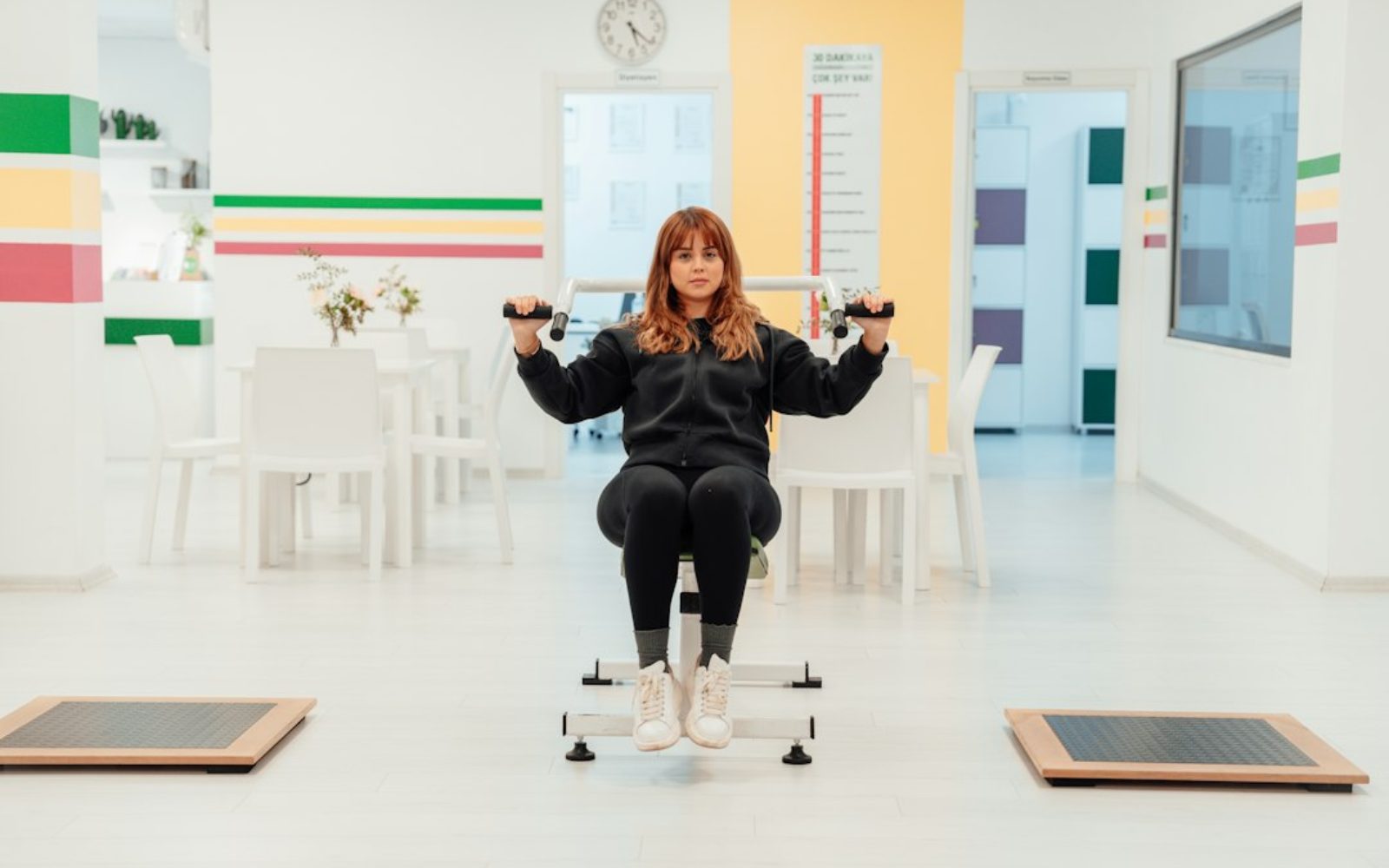
Short answer
- Go at a quiet hour for the first week. In a 2021 PureGym survey of about 850 gym users, 62% said going at quieter times makes them feel more confident.
- Spend your first 10 minutes walking the floor: lockers, water and toilets, then the four or five machines you will use. Then warm up and do a light first set.
- Train 2 or 3 days in week one, full body, with a rest day between sessions. ACSM guidance for novices is 2 to 3 days a week.
- Keep it light: 2 sets of 10 on each exercise, stopping with several reps still in the tank. The goal of week one is to learn the moves.
- Expect soreness a day or two later. It typically peaks 24 to 72 hours after exercise, and it tends to ease as your muscles get used to the work.
On your first time at the gym, go at a quiet hour, spend ten minutes learning the layout, and do a short full-body session with light weights: four or five exercises, two sets of ten. Do that two or three times in your first week, with a rest day between sessions, and expect some muscle soreness a day or two after the first one.
That is the plan. The rest of this post fills in the details: what to do in the first ten minutes, how to work a machine you have never touched, what the soreness means, and the handful of etiquette rules that actually matter.
Why the first visit feels worse than it is
If you are nervous about walking in, you have company. In a 2021 survey of about 850 gym users by the UK chain PureGym, 60% said they were most concerned about not knowing how to use the machines. 43% said they struggled with not knowing where to begin when they walked in, and 36% said asking people for help was the most uncomfortable part of joining.
Notice what those worries are about. Not strength, not fitness, not how you look. They are about not knowing things: where things are, how they work, what to do next. Every one of those is fixable before you lift anything, and most of them are fixed by the end of your second visit.
The other thing worth knowing is that people in a gym are mostly looking at themselves. The regulars are counting reps, resting, or picking the next song. A new face on the leg press is not interesting to them.
Pick a quiet hour
The single easiest win is going when the gym is half empty. In the same PureGym survey, 62% said going during quieter times makes them feel more confident, the most popular answer of any. PureGym's own guidance for its UK gyms is that Mondays are generally the busiest day and 5pm to 7pm is the peak to avoid, while 7am to 8am and 9pm to 11pm are quietest.
Your gym will have its own rhythm. Two ways to find it:
- Look it up. Many gyms show a live occupancy count in their app, and the gym's Google Maps listing usually has a Popular times chart by hour.
- Ask at the desk. Staff know exactly when the floor empties out. While you are there, ask whether they offer a free induction or a short tour. Many gyms do, and it answers half your questions in fifteen minutes.
A quiet hour also means the machine you want will be free. You will not have to work out what to do when it is taken, though there is a simple answer for that too.
Your first 10 minutes
Do not start lifting the moment you walk in. Use the first ten minutes to get your bearings, in this order.
1. Lockers, water, toilets. Drop your bag, fill your bottle, and know where you are going if you need a break. It is a small thing, but it stops you wandering around later looking lost.
2. Walk the floor once. Do one slow lap. You are not looking for anything yet, just noticing where the zones are.
3. Find your machines. Open your plan and find each machine on it. Sit on each one before you load it and set the seat.
4. Warm up for about five minutes. A bike, a cross-trainer or a brisk walk on a treadmill. You want to be a little warm, not tired.
5. One light test set. On the first exercise, do a set with the lightest weight or the lightest pin, just to feel the movement. Then pick your working weight.
Learning the layout and the equipment
Knowing the room helps more than people expect. In the PureGym survey, 52% said knowing how to use specific equipment reduced their intimidation and 44% said knowing the layout gave them more confidence.
Most gyms are laid out the same way, in zones:
- Cardio: treadmills, bikes, rowers, cross-trainers. Usually near the entrance or the windows.
- Machines: pin-loaded stations, each built for one exercise. These are your friends in week one.
- Cables: tall frames with handles on pulleys that slide up and down. Very flexible, slightly confusing at first.
- Free weights: dumbbell racks, benches, and the barbells, racks and platforms, usually at the back.
- Stretching area: mats, foam rollers, sometimes a pull-up bar.
Machines are the easiest place to start because they guide the movement. Almost every one works the same way. There is a diagram on the frame that shows the movement and the muscle it trains. There is a seat or a pad that adjusts, usually with a pop-pin you pull out and slot back in. And there is a weight stack with a pin: slide the pin into the hole under the weight you want. Start light, because the numbers on one brand's stack do not match another's.
Set the machine so the joint that moves lines up with the machine's pivot. On a leg extension, that means your knee lines up with the round axle by the seat. If the diagram on the frame does not make it clear, this is a good moment to ask the staff. It takes them thirty seconds.
A simple first-week plan
The American College of Sports Medicine recommends that novices train 2 to 3 days a week, with loads in the range of an 8 to 12 repetition maximum. The NHS asks adults to do strengthening activities that work all the major muscle groups on at least 2 days a week. So two or three full-body sessions is the right shape for week one, not a split where Monday is chest and Tuesday is legs.
For week one, go lighter than that range: two sets of ten on each exercise, with a weight you could lift for several more reps. You are learning the movements, finding your seat settings and seeing how your body responds. You can push harder in week two. If you want a specific number to start from, there is a separate guide to starting weights for beginners.
Use the planner below to lay out your own week. Pick the days you can actually go, not the days you wish you could.
First-week planner
Tick the days you can go, where you train and how long you have. You get a day-by-day first week.
Days you can go (pick 2 or 3)
Before you go
A suggestion for week one, not a prescription. Pick weights you could lift several more times.
If you want to keep going after week one, the same structure grows into a three-day full-body routine where the weights start to climb.
Soreness: what to expect
You may feel fine walking out of your first session. A day or two later, getting off the sofa may involve a small noise. This is delayed onset muscle soreness, usually shortened to DOMS, and it is normal after exercise your muscles are not used to. A study in the Journal of Athletic Training describes it as typically peaking between 24 and 72 hours after exercise.
The same study had people repeat a similar bout of exercise 6 to 9 weeks later, and soreness and tenderness were lower after the second bout than after the first. Most lifters notice something similar over a much shorter span: the first week is the sorest, and it gets milder once your muscles have seen the work before. It is one more reason to start light, because a brutal first session can put you off going back for the second.
A few practical points:
- Sore is not injured. DOMS is a dull, general ache in the muscle, worse when you stretch or use it. A sharp pain, pain in a joint, or pain that started suddenly during a lift is different. Stop and get it checked.
- Keep moving on rest days. Many people find a walk or an easy bike ride takes the edge off the stiffness.
- You can train while a little sore. If your legs are mildly sore on session two, go ahead and keep the weights the same. If you can barely walk down stairs, you went too heavy; take an extra day and go lighter next time.
Etiquette in five rules
Gym etiquette sounds like a long list of unwritten rules. In practice it comes down to five:
- Put things back. Re-rack your dumbbells where they came from and strip your plates off the bar.
- Wipe what you sweated on. Most gyms have spray and paper towels near each zone.
- Do not camp. Resting on a machine between sets is fine. Sitting on it scrolling for five minutes while someone waits is not.
- Ask between sets. If you want to share a machine, wait until the person finishes a set, then ask how many sets they have left.
- Give people room. Do not stand directly in front of someone's mirror view or walk between a lifter and the rack while they are mid-set.
That is it. Nobody expects a beginner to know everything, and staff are paid to help. Asking them is not an imposition.
How Barbell Bowl handles week one
Barbell Bowl asks six short questions, including your experience, how many days you can train and how long you have, and whether you train in a full gym, a basic gym, at home or with bodyweight only. Then it builds a plan; for three days a week, that is a full-body A, B and C rotation. Every exercise has start and finish photos with steps, so you can check how a machine works without asking anyone. The app suggests starting weights for the main barbell lifts; machines start blank and you enter what you used. If you miss a day, nothing moves: the next workout is simply the next one in the sequence. It is free on Android, works offline, and has no ads.
This is general training information, not medical advice. If you have a medical condition, an injury, or pain that does not settle, talk to a doctor or physiotherapist before you start.
Questions people ask
What should I do on my first day at the gym?
Go at a quiet hour. Spend ten minutes finding the lockers, water and toilets, walking the floor once and finding the machines on your plan. Warm up for about five minutes, then do four or five full-body exercises for two sets of ten with light weights. Leave feeling like you could have done more. That is the right amount.
How many days should I go to the gym in my first week?
Two or three, with at least one rest day between sessions. The American College of Sports Medicine recommends 2 to 3 days a week for novices, and the NHS asks adults to do strengthening activities on at least 2 days a week. There is no need for more than three in week one.
How do I get over gym anxiety as a beginner?
Remove the unknowns before you go. Pick a quiet hour, have a written plan on your phone, and ask the desk about a free induction or tour. In a 2021 PureGym survey of gym users, 62% said quieter times made them feel more confident, and 44% said knowing the layout helped. Most of the anxiety fades after two or three visits.
How sore will I be after my first workout?
Expect some muscle soreness in the days after, typically peaking between 24 and 72 hours after the session. It is a dull ache, not a sharp pain. Starting light helps keep it manageable, and it tends to ease as your muscles get used to the work. Sharp pain or joint pain is different and worth getting checked.
Should beginners use machines or free weights?
Machines are easier to learn in week one because they guide the movement and adjust with a pin, so you can focus on how the exercise feels. Free weights are fine for beginners too; they just take a little longer to learn. A mix is fine. Most beginner plans use a few of each and add more free weights over time.
Sources
- PureGym: Suffering from gymtimidation? Here are the best ways to beat it (2021 member survey)
- Medicine and Science in Sports and Exercise (2009): ACSM position stand, Progression models in resistance training for healthy adults
- NHS: Physical activity guidelines for adults aged 19 to 64
- Journal of Athletic Training (2002): Temporal pattern of the repeated bout effect of eccentric exercise on delayed-onset muscle soreness
More from the blog
Why People Quit Gym Apps, and What Keeps Them Going
Fewer than 4 in 100 people who install a health and fitness app are still using it a month later. Habits take longer than that to form. The gap explains most of the quitting.

3-Day Full Body Workout for Beginners: A Simple A/B/C Plan
Three different whole-body sessions, three days a week, done in order. What goes in each one, how to add weight, and what to do when Wednesday falls apart.
How much weight should a beginner start with at the gym?
Starting points for the squat, bench, deadlift, overhead press and row, why light is fine, and a first-session test that finds your real number in ten minutes.